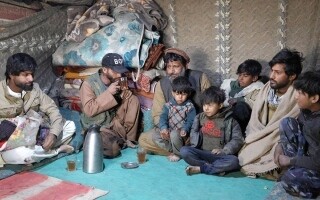
In a dimly lit tent on the outskirts of Kabul, Samiullah and his wife Bibi Rehana sat down to eat dry bread and drink tea, their only meal for the day. With them were their five children and their three-month-old grandson. Samiullah, 55, said, "We have reached a stage where we have become content with death." His family also includes two older sons, aged 18 and 20, and their wives. They were among the millions of people who returned from neighboring Iran and Pakistan following last year's deportation operations. After returning to Afghanistan, he added, "Things are getting worse day by day. What happened to us happened, but at least the lives of our children should be better." The United Nations World Food Program estimates that 17 million people are suffering from acute hunger due to significant cuts in international aid. Samiullah was one of the returning Afghans who spoke before the protests in Iran. He said his family was suddenly moved from a modest home in Iran to a temporary tent after a raid by Iranian authorities led to their arrest and deportation. He explained that they managed to save some belongings but could not take out all their savings, which would have helped them get through the winter. Reuters was unable to reach Iranian authorities for comment. Meanwhile, Afghan government spokesman Zabihullah Mujahid stated, "Returning migrants to their country receive as much assistance as possible," in areas including transport, housing, healthcare, and food. In a statement, he added that rapidly eradicating poverty is impossible in a country that has suffered from conflict for 40 years and lost all its revenue and resources despite extensive reconstruction efforts. Mujahid continued, "Economic programs take time and do not have an immediate impact on individuals' lives." The World Food Program says Iran and Pakistan have deported more than 2.5 million Afghans as part of large-scale mass deportation programs. Tehran stepped up deportation operations last year, citing security and resource concerns. Islamabad also accelerated deportations amid accusations that the Taliban movement is harboring militants responsible for cross-border attacks inside Pakistan, accusations that Afghanistan denies. Iran and Pakistan deported 2.5 million Afghans as part of large-scale mass deportation programs.