The Taliban government's Minister of Virtue and Vice announced a new restriction for Afghan women: they are prohibited from praying aloud and reciting the Quran in front of other women, amidst a series of regulations that increasingly limit their freedoms. This rule adds to other morality laws that restrict women, such as the obligation to not raise their voice in public and to cover their faces when outside their homes.
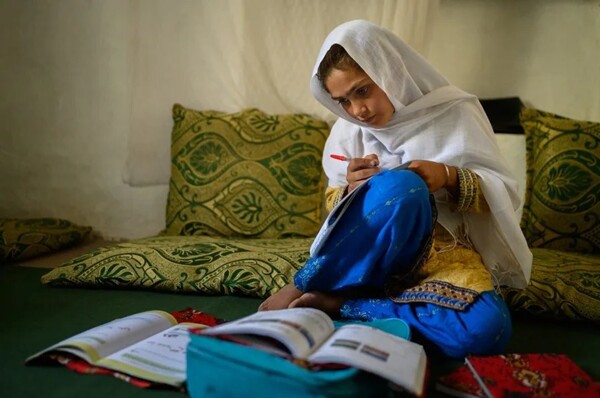
Women in Afghanistan already face severe restrictions in areas such as education, access to public spaces, and job opportunities. School is only allowed up until the sixth grade, and they must adhere to strict dress and behavior codes, in addition to needing a male guardian when traveling.
The ministry led by Khalid Hanafi quickly clarified that the new prohibition is part of the morality laws imposed by the Taliban. During an event in Logar province, Hanafi stated that it is forbidden for women to recite Quranic verses or perform calls to prayer, emphasizing that even singing is prohibited for them.
On the other hand, it was reported that a national awareness program regarding these laws is being carried out, with the participation of ministry officials at both provincial and district levels. The goal is, according to the ministry, to influence public perception and increase knowledge about divine mandates.
Additionally, some provinces have already begun prohibiting media from showing images of living beings, another controversial measure stemming from the morality laws imposed by the Taliban since their rise to power in 2021. Even common expressions in Islamic faith, such as takbir chants (Allahu Akbar) or 'subhanallah', are also restricted, reinforcing control over the daily lives of Afghan women.